
When I started my recovery journey, I had what so many do not: both familial and financial support. Even though the nearest treatment was out of state, my family made sure I could access quality care. I witnessed firsthand how rocky the path to healing can be when recovery is hampered by geography and cost.
Fueled by the success of my own recovery, I became determined to close the access gap for others. That conviction became the foundation for my work at Ascension Recovery Services. As Founder and CEO, I’ve spent the past decade building treatment centers that remove barriers, restore dignity, and most importantly keep recovery within reach—designing, launching, and managing more than 80 substance use disorder (SUD) programs across 35 states, to date.
Millions of people nationwide face the same barriers I did, but without the family or financial safety net that made my recovery possible. Nowhere is this unmet need more visible than in our nation’s Tribal communities, where SUD has taken an especially devastating toll. According to CDC data, overdose mortality among Native populations is the highest of any group in the United States, at roughly 65 deaths per 100,000. Behind each statistic are real people, families, and entire communities desperate for solutions within systems never designed with them in mind.
Unfortunately, even if Tribal Nations have the leadership and vision to build behavioral health infrastructure, financing poses yet another seemingly insurmountable inequity hurdle. Traditional lenders cannot collateralize trust land, private investors falter without predictable returns, and federal grants rarely cover full construction. When systems are fragmented, funding inconsistent, and care design oversimplified, individuals don’t just ‘fall through the cracks,’ they simply tire of leaping over gaping chasms in their care.
That combination of high need and low access has left many Tribal leaders with an unsolvable equation; communities most affected by addiction have the least access to the care needed to address it. Filling this gap requires innovative ideas in recovery program design and financing.
At Ascension Recovery Services, we’ve built our work around the simple belief that recovery shouldn’t hinge on proximity or privilege. To bridge this gap, we’ve developed a novel model that merges our social commitment with creative, strategic financing.
Strong partnerships are nonnegotiable. We work directly with Tribal leaders, clinicians, and community members to shape individualized programs that honor local traditions while delivering state-of-the-art care.
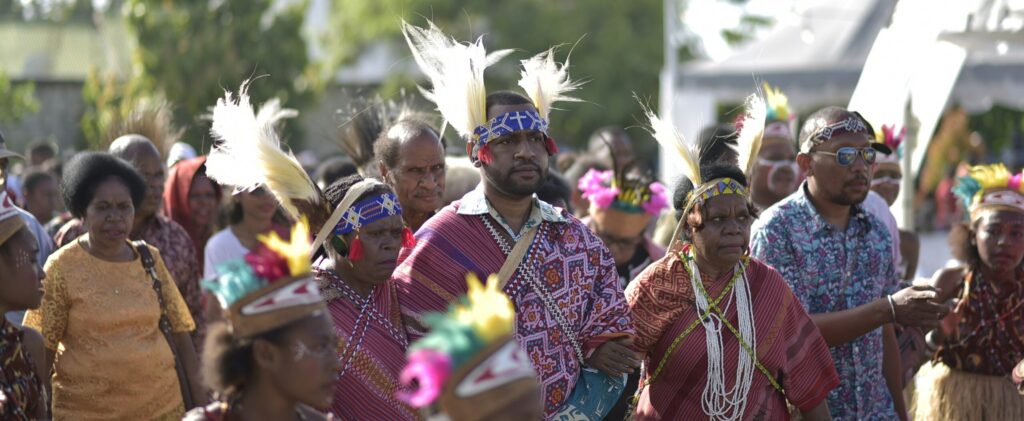
The Pawnee Nation Behavioral Health Facility in Oklahoma is one of the finest examples of this model in action. Built in close partnership with the Pawnee Nation, the $22 million, 21,000-square-foot center provides detoxification, residential treatment, outpatient services, and integrated mental health care intricately woven together with traditional healing practices that reflect Pawnee values. The project was financed through a diversified capital stack. It combined Tribal American Rescue Plan Act (ARPA) funds, federal and state grants, New Markets Tax Credits facilitated by Baker Tilly, USDA-backed loans, and short-term private investments. Remarkably, it was completed at no direct cost to the Tribe, which now proudly owns the facility outright. This initiative has created local jobs, strengthened community partnerships, and brought lifesaving care within reach for families across five counties. That is sustainability.
This project demonstrates what’s possible when innovation and empathy work together. It’s proof that business and compassion aren’t competing forces, but powerfully synergistic.
Today, we’re helping other Tribal Nations replicate this approach, each model tailored to reflect unique local traditions, governance, and health priorities. Our mission at Ascension Recovery Services is to ignite momentum to reimagine systems where recovery is accessible, coordinated, sustainable, and community centered. Our broader vision is to replicate and adapt this framework for application anywhere there is a need (e.g., rural America, urban centers, or other Tribal Lands).
As I look ahead, I see a growing movement of leaders, investors, and policymakers who get it. Empathy and fiscal accountability belong in the same conversation. Because every life lost to addiction carries an incalculable emotional, social, and financial cost that no community can afford. But we have found that hope lies in community collaboration. When we invest in grassroots infrastructure, we invest in communities, sustainability, and generational wellness.
Our experience proves that investing in healing means investing in a future where recovery isn’t imported, it’s homegrown.